 Addiction is a silent epidemic that transcends nationalities, cultures, and socioeconomic backgrounds. From the opioid crisis in North America to rising alcohol misuse in parts of Asia and Africa, substance use disorders are a global challenge requiring a united response. Yet, despite its worldwide reach, addiction is often treated in isolated pockets, with uneven access to care and support. Healing without borders means recognizing that addiction is a shared human issue—and that collaboration, compassion, and innovation can drive a global movement toward recovery.
The Universal Nature of Addiction
Substance use disorders affect more than 35 million people globally, according to the World Health Organization (WHO). No country is immune, but the availability and quality of addiction care vary dramatically. In high-income countries, treatment may be more accessible, but stigma and systemic gaps still persist. In lower-income nations, limited healthcare infrastructure often means addiction treatment is rare or nonexistent. These disparities leave millions without the help they need.
Despite the differences in local contexts, the core of addiction remains the same: a chronic, relapsing brain disease that thrives in silence and shame. Understanding this common ground can form the basis for global cooperation.
A Global Call for Unity
Healing without borders calls for an international effort to:
-
Share Knowledge and Best Practices
Countries with well-established treatment models can support others through knowledge-sharing initiatives. Training healthcare professionals, exchanging research, and collaborating on culturally sensitive approaches can raise global standards for addiction care. -
Invest in Global Addiction Infrastructure
International organizations, such as the United Nations, World Bank, and global health NGOs, should invest in treatment facilities, outreach programs, and policy development in underserved regions. Equitable funding ensures that no country is left behind in the fight against addiction. -
Leverage Technology for Worldwide Access
Telehealth platforms and mobile apps can deliver counseling, peer support, and educational resources across borders. Especially in remote or conflict-affected areas, digital tools can be life-changing. A global digital recovery network could connect individuals and providers regardless of geography. -
Promote Harm Reduction as a Global Norm
Countries should adopt harm reduction strategies, such as needle exchanges and overdose prevention programs, as standard public health responses. These efforts save lives and offer people a bridge to recovery, rather than punishment. -
Combat Stigma through Global Advocacy
Stigma remains a significant barrier to treatment worldwide. International campaigns that promote compassion and understanding can change public attitudes, encourage help-seeking, and reduce discrimination against those with substance use disorders.
Conclusion
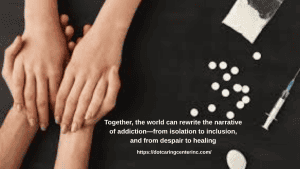
Addiction doesn’t respect borders—neither should our response to it. Healing without borders means building a compassionate global movement that prioritizes access, equity, and human dignity. When nations unite to fight addiction with shared purpose and resources, recovery becomes not just a possibility for some, but a promise for all. Together, the world can rewrite the narrative of addiction—from isolation to inclusion, and from despair to healing.